







see all jobs
Opening session of Global Wellness Summit 2015 outlines challenges


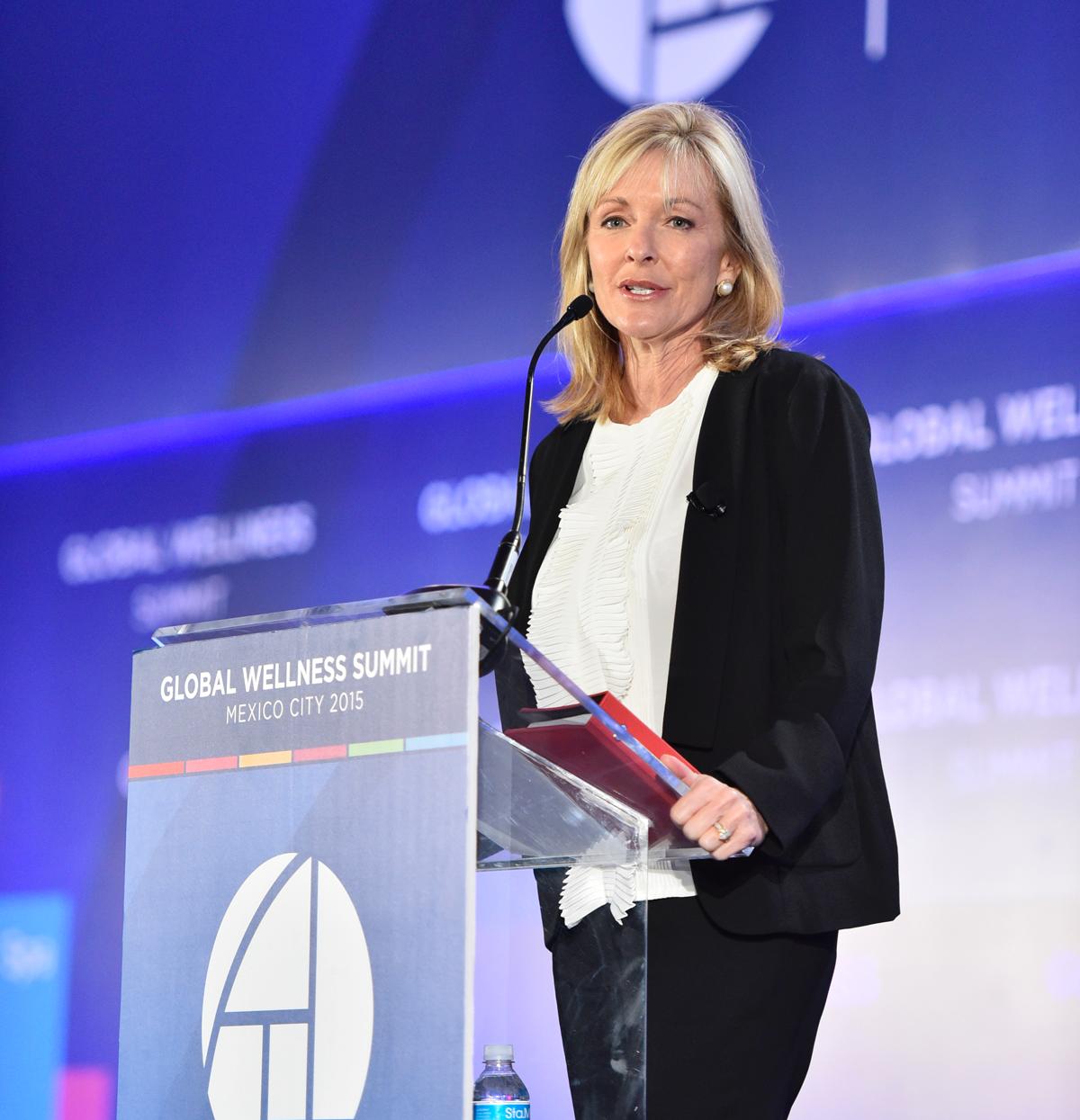
The Global Wellness Summit (GWS) kicked off in Mexico City today (13 November) with a welcome by film maker Louie Schwartzberg, who created inspiring film footage for the GWS audience, looking at the importance of finding focus in establishing your true path.
He said to build a well world, we have to find our focus and to do this we have to be grateful to be alive and to be part of nature.
Schwartzberg, the son of a holocaust survivor, believes people bounce back better from suffering when they have gratitude in their hearts. He said people yearn to live in communities which support them in leading meaningful lives.
"The task we have today is to understand the language of nature," he said, "we need to find commonality with the organisms that support us. If we don’t do this, we’ll not only destroy these organisms, we'll destroy ourselves.
“Nature is beauty’s tool for survival,” he said, “because we protect what we love, and this applies to ourselves and the earth – we must fight against industries which destroy our living planet.”
He said, everything in nature is composed of networks, nothing lives in isolation – we need to have a shift in consciousness to understand this.
Schwartzberg then led delegates in two minutes of energising dance to rousing cheers.
Chair, Susie Ellis, explained the change of name of the event from Global Spa Summit to Global Wellness Summit, saying it’s “an appropriate and purposeful evolution of our name and mission – we recognise the opportunities that open up for the industry as we cast a wider net.”
She said the GWS is galvinising the global movement to shape and define the wellness industry, which is currently worth US$3.4trillion and that the industry’s work in promoting prevention is vital.
“Educating people about healthy lifestyles is what we do well,” said Ellis, “and this extends to healthy travels, schools, workplaces and homes.
“We share a sense of purpose and responsibility - none of us can do this on our own. Standing together we can do so much more.”
The 2015 summit has a new focus on workplace wellness which is becoming more important. Another theme is medical and wellness worlds coming together.
Economist Thierry Malleret said the ageing world population, combined with growing obesity and ill health, will take us to a point where there will be no “other choice for the world but to make wellness mandatory.”
He said there are only two ways to overcome the challenge of ageing and ill health – a sudden increase in productivity triggered by technology or preventive healthcare to reduce costs through wellness. The first in uncertain, making the second – wellness – inevitable, in his view.
Ageing trumps other trends, he said, and is the single biggest biggest challenge. Many undeveloped countries are going to be old before they have the chance to become rich.
Maggie Hsu from Zappos talked about holacracy – an organisational system based on self management and transparent teamworking which Zappos is deploying.
She said working in a holacracy means playing to people’s strengths so each worker can have numerous roles within an organisation depending on their strengths and interests.
In a holacracy, everyone has a responsibility to sense gaps between what is and what could be and to take action to close it. Holacracy separates the work from the people.
Hzu said every time the size of a city doubles, innovation and productivity increases by 15 per cent, but when companies get bigger, innovation and productivity goes down. Zappos wants its organisation to function more like a city. Structures need to appear and disappear based on the forces that are acting on the organisation at any one time. In a holacracy, everyone is responsible for innovation.
Samer Hamadeh founder and CEO of Zeel explained how the company has built its startup operation around home massage treatments which are booked online and delivered by pre-vetted and registered therapists.
He said 21 per cent of massages are booked after 9.00pm and 64 per cent after 5.00pm, when most spas are closed, so he believes the Zeel service is complementary to spas and has unlocked new potential demand.
In line with this, Hamadeh announced Zeel is working with spas on a programme called Zeel Professional which launched recently. The programme was piloted with Nic Ronco’s Yelo Spa which is using Zeel’s tech platform to optimise previously unfilled appointments each month.
Zeel coordiates therapists’ attendance and payment and Yelo Spa interviewed and trained Zeel massage therapists for this opportunity. Customers pay the operators’ price, but they’re using Zeel’s staff.
Zeel is also offering massage in the office in the form of a workplace wellness 'Zeel Massage' – 50,000 have already been delivered to companies such as Google, Zappos and Pinterest.
The company is also offering a “Massage Zeelot” membership which requires a monthly subscription. Members get a 15-25 per cent discount and a minimum of one massage a month. When they sign up, a massage table is shipped to their home. “We’re out to power massage everywhere,” he said.
He said although his business is disruptive, the economics are similar to spas, “but we pay therapists better.”
Neuroscientist Clauida Aguirre talked about the skin:brain connection, explaining that we are only beginning to understand the science of how the state of the skin affects and reflects our health. She said: “We wear our identity on our skin.”
Delegtes heard that there is a clear neurobiological difference between people who say they have sensitive skin and those who don’t, in terms of their brain response.
SRI International (SRI) revealed early findings from the Global Wellness Institute’s upcoming research report into wellness at work. The full report will be published in January 2016.
SRI’s Ophelia Yeung and Katherine Johnston said bad working conditions worldwide were undermining the wellness of the planet and productivity. Seventy-four per cent of people live on less than $3/day. Johnston said: “Wellness at work is the right to work in a manner that is healthy, safe, motivating and edifying. We are responsible for conducting work in a way that improves our wellness and the wellness of others.”
Their research found that existing workplace wellness schemes are valued by less than one in ten workers because they are suspicious of company’s motives in delivering them.
SRI found the lack of workplace wellness is costing the US $1,100b annually in health charges, $250bn in work-related injuries, $300b in stress at work and $550bn in disengagement at work
Workplace wellness is $40bn globally as an industry but SRI Yeung said many workplace wellness programmes miss the mark because they are seen as an HR function, instead of being integrated into the company culture. She said companies should adopt a wellness culture across the entire organisation. The workplace is an ideal place to form healthy habits.
SRI identified seven trends for the future of work:
1. Both companies and governments will demand change due to rising costs and worsening health.
2. Wellness at work is going to explode across the world in the coming 5-10 years: employers need to keep workers well to stay competitive
3. Workplace wellness programmes will disappear as we know them today - they will no longer exist as an HR function and in their place, companies will create a culture of wellness. Wellness will be imbedded in long-term strategy
4. People will take more responsibility for their own wellness and how work affects it. We are more aware of what parts of work make us unwell. We want to do work that brings us meaning, we want to be respected, treated and paid fairly, with a good work:life balance. People will look for areas they can take action in. As they become empowered they will no longer look so much to governments to take the lead.
5. Companies that do not provide well working environments will not be able to recruit and retain good people.
6. Doing right by employees and the community is good for business. People will be less interested in companies associated with the destruction of the environment or those that don’t treat their employees fairly.
7. Governments will become more aggressive about mandating wellness, including in the workplace.
More News





- News by sector (all)
- All news
- Fitness
- Personal trainer
- Sport
- Spa
- Swimming
- Hospitality
- Entertainment & Gaming
- Commercial Leisure
- Property
- Architecture
- Design
- Tourism
- Travel
- Attractions
- Theme & Water Parks
- Arts & Culture
- Heritage & Museums
- Parks & Countryside
- Sales & Marketing
- Public Sector
- Training
- People
- Executive
- Apprenticeships
- Suppliers