







see all jobs
Vibrating tendons before exercise reduces perceived fatigue and allows people to push harder


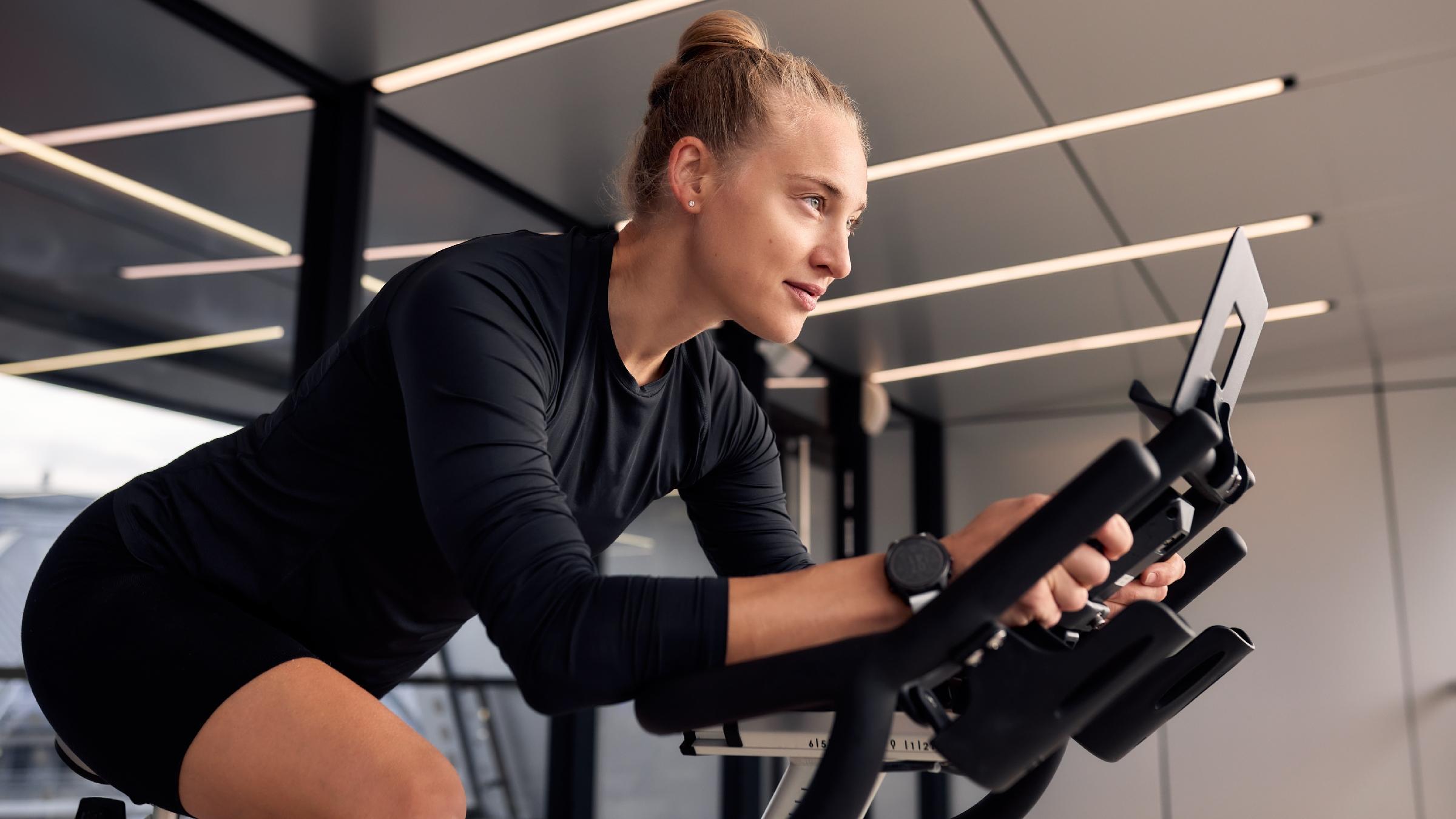
Vibrating tendons before cycling allows people to push harder without feeling mental strain, according to a study.
The research was undertaken by Benjamin Pageaux, a professor in the School of Kinesiology and Physical Activity Sciences at Université de Montréal, working with researchers from Université Savoie Mont Blanc in France.
Volunteers took part in lab tests on stationary bikes. Each completed two sessions – one after tendon vibration and another without.
The device was strapped to Achilles and knee tendons and activated for 10 minutes before cycling. After that, participants cycled for three minutes at a pace they perceived as either moderate or intense, adjusting their effort to match their target.
After tendon vibration, participants produced more power and showed higher heart rates compared to sessions without the pre-exercise vibration. However, even though their bodies were working harder, their sense of effort did not increase.
Changing 'effort signals'
While the precise biological mechanisms are still being studied, Pageaux has suggested possible explanations.
"Depending on the amplitude and frequency of the vibration, we can either excite or inhibit neurons in the spinal cord," he said. "Prolonged vibration changes the reactivity of the neuromuscular spindles and alters the signal sent to the brain."
By changing these 'effort signals' travelling from the muscles to the brain, vibration appears to reshape how movement and exertion are perceived.
This brain-body disconnect could help make exercise feel less intimidating for people who struggle to stay active.
The perception of how hard exercise is plays a role in whether people stick with it. When it feels overwhelming, they’re more likely to stop or avoid it, whereas if it feels manageable, it becomes more enjoyable and easier to continue over time.
This raises the question of whether the feeling of effort could be reduced, helping people push past the sense that exercise is too hard.
Encouraging people to stay active
The research is still in its early stages, with the testing limited to these cycling sessions under controlled conditions.
"It hasn't been tested in a marathon, only during a short, three-minute cycling exercise," Pageaux says. "However, this is the first time the effect has been shown to work with this type of exercise."
The team will now examine brain activity more closely during exercise, using electroencephalography and MRI to see how tendon vibration influences neural activity during exertion.
The researchers are also studying the reverse process to understand how pain and fatigue amplify the feeling of effort and make physical activity feel more difficult.
Ultimately, the goal is to develop strategies that lower perceived effort and help more people become physically active, especially those who are currently sedentary.
"By gaining a better understanding of how the brain evaluates the link between effort and perceived reward during exercise, we hope to promote more regular physical activity," Pageaux said.
Prolonged passive vibration of Achilles and patellar tendons decreases effort perception during subsequent cycling tasks was published in the Journal of Sport and Health Science
More News













- News by sector (all)
- All news
- Fitness
- Personal trainer
- Sport
- Spa
- Swimming
- Hospitality
- Entertainment & Gaming
- Commercial Leisure
- Property
- Architecture
- Design
- Tourism
- Travel
- Attractions
- Theme & Water Parks
- Arts & Culture
- Heritage & Museums
- Parks & Countryside
- Sales & Marketing
- Public Sector
- Training
- People
- Executive
- Apprenticeships
- Suppliers