







see all jobs
How should architects design the malls of tomorrow?


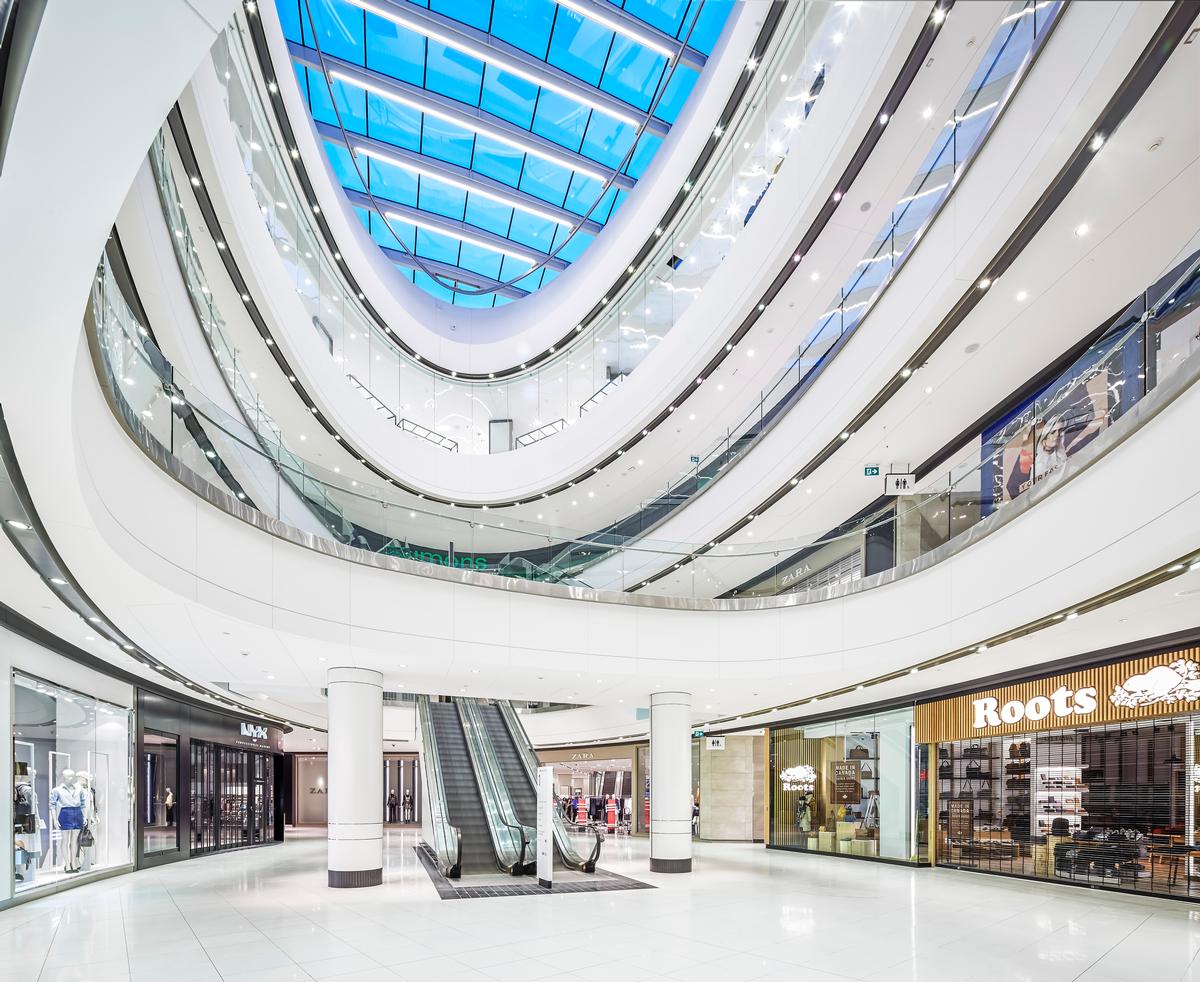

The advent of the sharing economy, the growing prominence of drones and our increasing demand for authentic and memorable experiences are among some of the factors architects must take into account when designing the malls and shopping destinations of tomorrow.
That’s the view of Bryan Croeni, Advance Strategy director at global architecture and urban planning giant B+H, who revealed to CLADglobal the practice’s findings into the future of the mall as a design typology.
“While designers may intuitively feel they have a pulse on the future of retail, in today’s highly disruptive environment it’s impossible to predict how the mall will evolve,” he said.
“Many malls are dying today, many are struggling to reinvent themselves and still – amidst the chaos – others are flourishing. It’s clear that the greatest threat facing the shopping mall is e-commerce; however, this isn’t the only consideration.
“Our firm recently gathered all of our design leaders for a two-day design charrette to explore the future of ‘the mall’, and the first thing we did was acknowledge that we don’t have all the answers. However, by studying the trends impacting mall design, we were able to establish markers to guide our exploration.
"This led to the team breaking up the mall into its individual attributes. Analysing and re-imagining each individual component, allowed us to piece together a range of future scenarios that will guide us as we design the malls of tomorrow.”
Croeni set out eight specific considerations designers working on large-scale projects should start to consider.
MOBILITY – WAR OF THE PARKING SPACES
As the car becomes detached from consumer habits, designers will need to account for emerging modes of transportation and embed future mobility options into present-day shopping experiences. The world is preparing for the autonomous vehicle and empty parking lots are already presenting opportunities to introduce mixed uses. But we need to think bolder. Taking the Hyperloop home, for instance, will be more appealing if a drone is there to carry your shopping bags.
SPACES – EXPLODE THE BOX
Traditional big box anchor tenants and corridors full of rigid spaces make less sense in the domain of online shopping. Since physical space no longer dictates where and how we do commerce, a shift to modular flexible spaces that can expand and contract based on the needs of the shopper will become the norm. At its core, the mall is a forum for experiences and commerce – the reasons to confine both to a prescribed physical space are rapidly dwindling.
TECHNOLOGY – THE DIGITAL DIVIDE
Today, the mobile share of global e-commerce is estimated at 70 per cent, fueled by the 6 per cent of the global population that owns a smartphone. Malls need to fight fire with fire, by ensuring the integration of technology acts in service to human experience and not as the experience itself. Technology can be best leveraged to make spaces instantly programmable and customisable.
INFRASTRUCTURE – PLUG AND PLAY
Building on technology, the increasing pressure to update antiquated infrastructure to align with the global energy transition is the perfect opportunity to embed flexibility and customisation into the makeup of the mall. The mall can act as the spine that everything plugs into – receiving and sending the information to potential retailers, programmers, vendors and guests.
TENANT MIX – SYSTEMIC CHANGE
A mall programmed around social attractors that draw people together can invariably change based on shifting user wants, needs and desires. At the Crystal Galleria in Shanghai, B+H designed space for food offerings in 40 per cent of the six-level building to accommodate for a shifting focus to experience and good. Flexibility and change should be embedded into the mall’s structure to allow for pivots in use and function. An extension of the Airbnb/Uber models can be leveraged to facilitate an element of purposefully transient tenant spaces.
USER EXPERIENCE – CAMPFIRE
Buying stuff will not survive as the primary purpose of the mall. In the future, we’ll go to the mall to 'wake up'. Retailers are already increasing their programming with a focus on experiences. As the lines between live, work, and play continue to blur, community and social activity will become the generators of retail and not the other way around.
INVESTORS – SHARING SPACES
Change, not growth, is shaping an increasingly global investment market. A mall that is a collection of experiences and opportunities for commerce lends itself to a new kind of ownership model built around multiple stakeholders, community ownership and the sharing economy.
GUESTS – THE NEXT DISRUPTORS
Just three major consumer groups will generate 50 per cent of total global urban consumption growth between now and 2030: the retiring and elderly in developed economies, China’s working-age population, and North America’s working-age population. The next disruptors are Generation Z, who have demonstrated a willingness to trade in technology for authentic experiences that can’t be replicated anywhere else.
The growing need for investors, retailers, architects and designers to consider consumer demand for real experiences is a trend that has been highlighted by a number of industry figures in recent times.
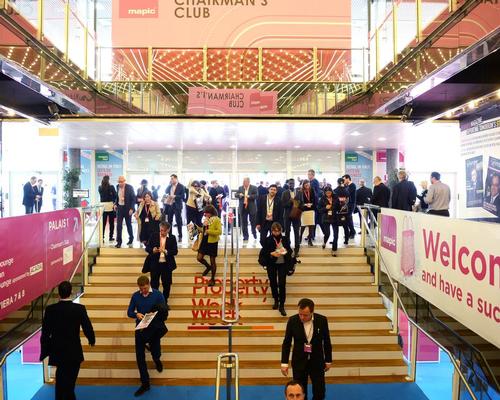
Last November, Nathalie Depetro, director of the International Retail Real Estate Market (MAPIC) told CLADglobal that “diversification in design has become more important than ever in this age where we like to capture our experiences online and on social media”.
She said: “Architects have a larger role than ever planning our retail spaces because now people don’t just go there to shop – they want to be entertained, meet friends, hang out with family, socialise and leave with memories.”
More News


OMA has completed a major transformation of New York's New Museum, creating a larger cultural campus that combines expanded exhibition spaces with learning, ... More









- News by sector (all)
- All news
- Fitness
- Personal trainer
- Sport
- Spa
- Swimming
- Hospitality
- Entertainment & Gaming
- Commercial Leisure
- Property
- Architecture
- Design
- Tourism
- Travel
- Attractions
- Theme & Water Parks
- Arts & Culture
- Heritage & Museums
- Parks & Countryside
- Sales & Marketing
- Public Sector
- Training
- People
- Executive
- Apprenticeships
- Suppliers