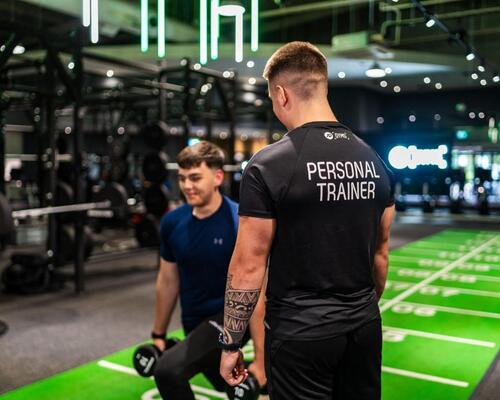












Weight loss from drugs only lasts 10-20 months finds University of Oxford


Research from the University of Oxford has found that people using weight loss drugs return to their original weight less than a year after stopping the injections.
A study of both older and newer GLP-1s, presented at the European Congress on Obesity, found that patients typically lost an average of 8kg when using all types of medications, but returned to their original weight within an average of 10 months after stopping their usage.
Within the sample, those taking higher-dose medications Wegovy (a semaglutide) and Mounjaro (tirzepatide) lost twice as much weight when compared with people using the older-style medication, losing an average of 16kg on average.
However, these patients also regained weight, putting on 9.6kg in the first year after coming off the drugs, indicating that at this rate they could expect to regain the 16kg lost in around 20 months.
The researchers studied 6,370 adults in eight randomised controlled trials and three observational studies. Of these, 1,465 were taking the higher-dose medications recommended specifically for weight loss.
The same researchers also found that while people also regained weight after conventional diets, the rate of 'regain' was much slower in these instances, with them taking at least five years to get back to the weight they were before.
“These drugs are very effective at helping you lose weight, but when you stop them, weight regain is much faster than [you do after stopping a more conventional] diet,” Susan Jebb, co-author of the study and professor of diet and population health at University of Oxford told The Guardian.
The UK government is currently backing a five year trial into the use of weight-loss medications to find out whether or not this could be the answer to the nation's obesity problem, but this research raises the question of whether the drugs are an appropriate intervention without more support being given.
It also underlines the importance of the fitness industry in supporting behaviour change for people who are using the drugs. It is not recommended for people to stay on them for more than two years and many take them for less if they are funding the course privately or can't cope with side effects.
“Is it going to be worth the NHS investing in these drugs if they only have them for a short time and then they pile all the weight back on, or does the NHS have to accept that these are going to be long-term therapies?” Jebb added.
“Either people really have to accept this as a treatment for life, or we in science need to think really, really hard, how to support people when they stop the drug.”
Because the use of weight loss drugs does not require discipline or habit change, the suggestion is that people have no resources to fall back on once they stop using them.
Responding to the findings, Tam Fry, the chair of the National Obesity Forum, told The Guardian: “It shouldn’t surprise anyone if people regain weight having used GLP-1 drugs without seriously attempting to improve their lifestyle … Using GLP-1s is not the quick fix many users believe it to be.”
Jane Ogden, a professor of health psychology at Surrey University, said there was no point “just throwing people back out into the world of their own lives, carrying on their own behaviours from before” after coming off the injections.
“They’re going to need psychological counselling, behaviour change, nutritional support from that moment on to help them sustain healthier behaviour in the long term, to keep the weight off,” she said.
“The NHS should introduce a stepped care approach through online support available to large numbers of people at low cost, online or in-person group support or more intensive 1:1 support.”
Liz Terry, editor of HCM said: "This new insight must change the way we approach the optimisation of weight loss drugs, while the overall response to this news – with its lack of reference to the importance of exercise – is concerning.
"We already know that people taking GLP-1 and other weight loss medications not only lose body fat, they also lose muscle – including from the heart – if they do not exercise while on the medication.
"In light of this new research and given the two-year limit on the use of weight loss medication, we can run a doom scenario where the worst outcome will be for people on these drugs – who do not exercise – lose muscle mass and heart muscle and then regain their body mass with a greater proportion of body fat within a year or two.
"In these cases they will have less energy-producing lean muscle tissue, meaning their metabolic rate will drop, so they will not be able to consume so many nutrients.
"There will be a greater burden on a weakened heart, less resilience, less stable joints and accelerated physiological ageing.
"Within as little as two years we are likely to have a growing cohort of people who are experiencing rapid ageing and a whole raft of metabolic and heart-related health issues and reduced quality of life.
"The industry must step up to be part of the solution to this, to help individuals and society avoid such catastrophic outcomes.
"There is clearly very little awareness of the role exercise and the physical activity sector can play in avoiding this outcome and we need to move quickly and with high level diplomacy to make this case to the powers that be before lives are ruined."
While there has been an degree of indecisiveness within the industry about how best to work with a new cohort of weight loss drug takers who are coming through the doors of gyms and leisure centres, physiologist, Oliver Patrick, says a few simple guiding principles are all that is needed: “We must avoid creating unnecessary and time-wasting barriers to entry for people who are [fit to exercise], because we need this cohort in our clubs, otherwise our industry will suffer enormously as a weight management solution.”
What Patrick did stress is approaching these individuals with empathy and meeting them where the are, keeping the workouts moderate and using body composition scans to measure progress. “Without an understanding of body composition, fitness professionals can’t prove the effectiveness of exercise beyond these drugs in isolation,” he says. “If we prove we keep and build muscle mass, we win. If we create unnecessary barriers to entry and fail to prove the effectiveness of our methods then real challenges lie ahead.”
Earlier this year, Future Fit for Business launched an online course Navigating GLP-1 for Sport and Physical Activity Professionals, which has been endorsed by GP, Dr Hussain Al-Zubaidi. The three-module course looks at the risks and benefits of the drugs, the science behind them and actionable guidance for working with people using them.
“With the rising use of GLP-1 weight loss injections, it’s vital for fitness professionals to understand these interventions," says Dr Al-Zubaidi. "This course equips them with the skills and knowledge to support clients before, during, and after treatment, ensuring long-term success and improved well-being. Together, we can bridge the gap between medicine and movement, fostering a healthier and more active future”.
Active IQ is also preparing to launch a diploma in Health and Wellbeing Coaching which includes a module which could potentially be spun off as a standalone unit to inform coaches working with people taking GLP-1 medications, it looks at the design and delivery of lifestyle programming and how to operationalise these wellbeing principles into practical interventions.
More News


Work is underway in Madrid on one of Europe’s most significant multi-functional complexes, combining sport, entertainment, culture and education.
The €800 ... More




Movie Park Germany has opened a new Paramount Pictures-themed attraction as part of its 30th anniversary celebrations, using immersive storytelling and adaptive reuse ... More




Efteling has opened Hooghmoed, a new family drop tower designed to broaden the appeal of its recently launched Sirene Island themed area and ... More

- News by sector (all)
- All news
- Fitness
- Personal trainer
- Sport
- Spa
- Swimming
- Hospitality
- Entertainment & Gaming
- Commercial Leisure
- Property
- Architecture
- Design
- Tourism
- Travel
- Attractions
- Theme & Water Parks
- Arts & Culture
- Heritage & Museums
- Parks & Countryside
- Sales & Marketing
- Public Sector
- Training
- People
- Executive
- Apprenticeships
- Suppliers