











Benefits of aerobic exercise may be lost in those with increased blood sugar levels


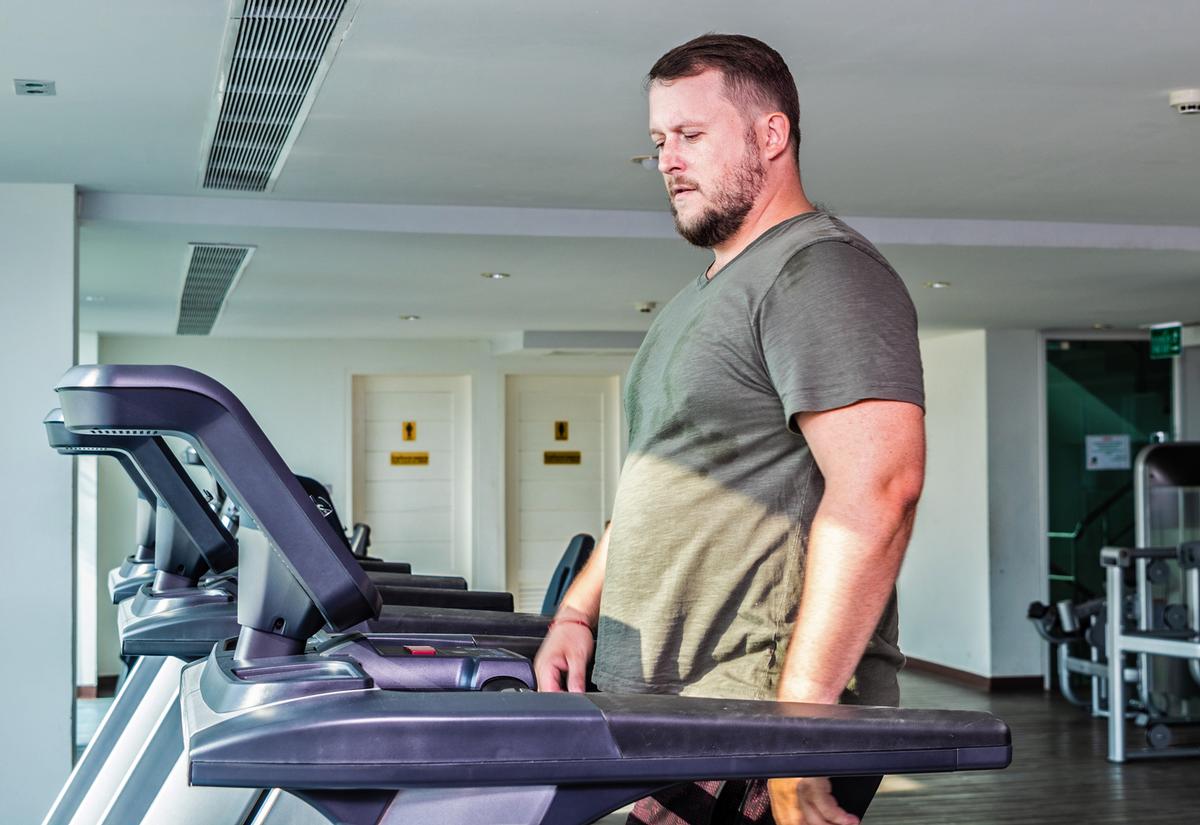
Research has suggested that some of the benefits of aerobic exercise may be reduced by higher-than-normal blood sugar levels – a condition known as hyperglycemia.
A team of scientists at Joslin Diabetes Center in Boston, US propose that high levels of blood sugar may prevent muscle remodeling in part by modifying the “extracellular matrix” proteins in the space between the muscle cells, where blood vessels are formed.
According to the researchers, the results strengthen the view that diet and exercise should not be treated as separate ways to improve health – as there is "more interaction between these two lifestyle factors than what was previously known".
Previous clinical studies have demonstrated that people with diabetes or chronically high levels of blood sugar struggle to improve their aerobic exercise capacity compared to people with normal blood sugar levels.
For the research, the team at Joslin studied two groups. The first consumed a Western diet, high in sugar and saturated fat, which caused some weight gain in addition to hyperglycemia.
The other group was modified to produce less insulin, which caused similar increases in blood sugar as the Western diet, even though the subjects ate a diet lower in sugar and fat and maintained normal body weight.
Both groups were subjected to a training protocol to boost their aerobic fitness.
In both hyperglycemic groups, the subjects failed to improve their aerobic exercise capacity compared to those with lower blood sugar levels.
In follow-up clinical tests with young adult volunteers, the Joslin scientists found that those who had higher blood sugar levels in response to ingesting glucose, a condition known as impaired glucose tolerance, showed the lowest aerobic exercise capacity.
The research was led by Joslin's Sarah Lessard, who has previously demonstrated that a biological pathway known as the “JNK” signaling pathway can act as a kind of molecular switch to tell muscle cells to adapt to either aerobic or strength training.
The scientists found that the JNK pathway signals were getting crossed in those with hyperglycemia, by activating pathways associated with strength training, even though they were performing aerobic exercise.
“As a result, the muscles of those with hyperglycemia have bigger fibers and fewer blood vessels, which is more typical of strength training, rather than aerobic training,” Lessard said.
Lessard's team also conducted follow-up clinical tests with young adult volunteers, which found that those who had higher blood sugar levels in response to ingesting glucose, a condition known as impaired glucose tolerance, showed the lowest aerobic exercise capacity.
“Looking at how their muscles responded to a single bout of typical aerobic exercise, we also saw that those with the lowest glucose tolerance had the highest activation of the JNK signalling pathway, which blocks aerobic adaptations,” Lessard added.
“The good news is, however, that although those with hyperglycemia failed to improve aerobic fitness with training, they still achieved other important health benefits from the exercise, including decreased fat mass and improved glucose metabolism.
“So, regular aerobic exercise is still a key recommendation for maintaining health in people with or without hyperglycemia.
"And it is important to note that people with hyperglycemia also can benefit from other forms of exercise, such as strength training, which is recommended for maintaining health."
Overall, the study suggests several approaches that might help people with chronic hyperglycemia eventually overcome the obstacles to building aerobic capacity. One is to adopt a diet designed to keep blood sugar levels low. Another is to take existing diabetes drugs designed to keep blood sugar levels in normal ranges.
“We often think of diet and exercise as separate ways to improve our health,” Lessard says.
“But our work shows that there is more interaction between these two lifestyle factors than what was previously known, and suggests that we may want to consider them together in order to maximise the health benefits of aerobic exercise.”


More News


Work is underway in Madrid on one of Europe’s most significant multi-functional complexes, combining sport, entertainment, culture and education.
The €800 ... More




Movie Park Germany has opened a new Paramount Pictures-themed attraction as part of its 30th anniversary celebrations, using immersive storytelling and adaptive reuse ... More


Efteling has opened Hooghmoed, a new family drop tower designed to broaden the appeal of its recently launched Sirene Island themed area and ... More

- News by sector (all)
- All news
- Fitness
- Personal trainer
- Sport
- Spa
- Swimming
- Hospitality
- Entertainment & Gaming
- Commercial Leisure
- Property
- Architecture
- Design
- Tourism
- Travel
- Attractions
- Theme & Water Parks
- Arts & Culture
- Heritage & Museums
- Parks & Countryside
- Sales & Marketing
- Public Sector
- Training
- People
- Executive
- Apprenticeships
- Suppliers